The horizontal forest: rethinking biodiverse lawns in urban forestry
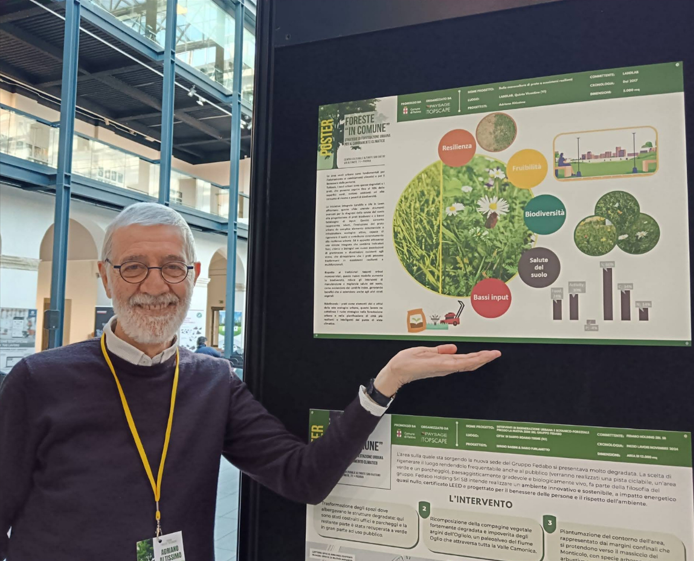
Urban centers are currently facing unprecedented climate challenges. To build resilient cities, we must look beyond traditional vertical woods. During the recent “Foreste in Comune” forum and the event in Padua, Adriano Altissimo from Landlab introduced a transformative vision: the concept of the horizontal forest.
The science of the living carpet
From a physiological perspective, a biodiverse lawn is much more than a simple decorative green surface. Scientific research shows that the turfgrass layer functions as a complex ecosystem. From deep roots to vibrant leaves, this living carpet performs essential ecological services.
Essentially, species-rich grasslands act as a specialized interface for carbon sequestration and soil protection. The high density of diverse plant species within the turf allows for superior thermal regulation, significantly cooling the urban heat island effect compared to grey infrastructure.
Practical applications for resilient cities
Treating biodiverse lawns as horizontal forests means moving away from high-maintenance monocultures. In dense, built environments, these grasslands create vital habitats for pollinators and improve water infiltration.
For the agricultural and landscaping sectors, this implies a shift toward selecting seeds that prioritize biological diversity. Consequently, these surfaces become scalable tools that offer citizens daily contact with nature while reducing the management costs associated with traditional lawns.
A commitment to green innovation
At Landlab, we believe that bringing the “horizontal forest” into the urban forestry conversation is a necessity. Our research team continues to experiment with plant interactions to transform urban spaces into functional ecosystems. We invite partners and institutions to explore these new agronomic frontiers with us, creating cities that are truly greener, gentler, and more beautiful by nature.